Repair TipsLocal Guides
How to unclog a kitchen sink without harsh chemicals
A kitchen sink clog is usually grease and food waste narrowing the trap or branch, and mechanical methods clear it without putting caustic liquid into your pipes. This guide uses boiling water, baking soda and vinegar, a plunger, and a snake, in that order.
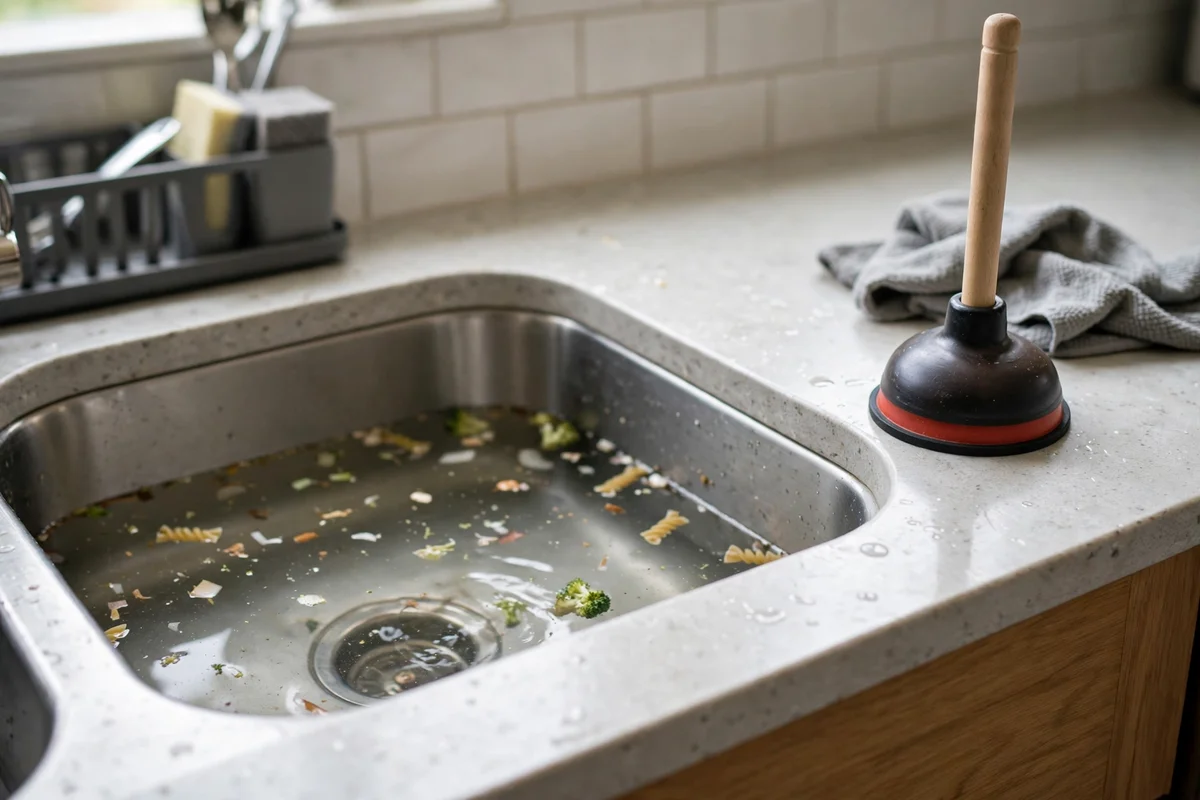
Start with the gentlest method that can work, and escalate only if the drain stays slow. Chemical cleaners are not on the list, because they can damage older pipe, harm rubber seals, and leave caustic liquid sitting in the trap.
Why harsh chemicals are a bad idea for your pipes
Chemical drain cleaners generate heat and corrosive reactions that can soften plastic pipe, accelerate corrosion in older metal drains, and damage rubber gaskets. In Conyers homes with older drain lines, a chemical attempt can turn a simple clog into a pipe repair. The fumes are a further risk in a small kitchen, and if the clog does not clear, the trap holds a pool of caustic liquid that makes the next step, plunging, dangerous.
What can I use to unclog my kitchen sink in Conyers GA?
The safe toolkit is boiling water, baking soda, white vinegar, a plunger, and a manual drain snake. Boiling water melts grease and softens soap scum; baking soda and vinegar fizz and help break up organic matter; a plunger supplies pressure; and a snake reaches a clog further down the branch. Dish soap can help lubricate the pipe walls. Enzyme products are gentler than caustic cleaners but need many hours of contact to work, so they are not a quick fix.
- Boiling water: Melts grease and softens soap scum. Use a full kettle or a large pot-about 2 quarts.
- Baking soda and vinegar: Creates a fizzy reaction that helps break up organic matter. Use 1/2 cup of each.
- Plunger: Creates pressure to dislodge the clog. A flange plunger works best for kitchen sinks.
- Drain snake (manual): A 25-foot drum auger can reach most kitchen clogs. They are available at a Conyers hardware store..
- Dish soap: A squirt of grease-cutting soap helps lubricate the pipe walls.
Step-by-step: the boiling water and baking soda method
First, remove standing water from the sink. Second, pour a full kettle of boiling water down the drain to melt grease. Third, add half a cup of baking soda followed by half a cup of vinegar, cover the drain, and wait fifteen minutes. Fourth, flush with more hot water. Fifth, if the drain is still slow, plunge with a flange plunger, keeping the seal tight. If it still does not clear, a manual snake is the next step, used gently so the trap and branch are not damaged.
- Remove standing water. Use a cup or a turkey baster to bail out the sink. You want the drain opening clear so the solutions can reach the clog.
- Pour boiling water. Slowly pour 2 quarts of boiling water directly down the drain. Let it sit for 5 minutes. This alone often clears a grease clog.
- Add baking soda and vinegar. Pour 1/2 cup of baking soda into the drain, then follow with 1/2 cup of white vinegar. Immediately plug the drain with a stopper. The fizzing action will push against the clog.
- Wait 15 minutes. Do not run water during this time. The reaction needs to work on the blockage.
- Flush with hot water. Remove the stopper and pour another pot of boiling water. If the water drains freely, you are done.
- Plunge if needed. If water still stands, use a flange plunger. Place it over the drain, ensure a tight seal, and plunge 15-20 times with steady pressure. Then flush with hot water again.
How do I unclog a double kitchen sink in Conyers?
For a double sink, seal one drain with a stopper, fill the other basin with a few inches of water, and plunge the open drain so pressure goes through the shared trap rather than up the other basin. Switch sides and repeat. If both basins stay slow, the blockage is further down the shared branch, and a snake or a professional check is the next step.
- Seal the left drain with a rubber stopper or a wet rag.
- Fill the right basin with 2-3 inches of water.
- Plunge the right drain vigorously for 15-20 seconds.
- Remove the stopper from the left side and check if the water drains.
- If not, repeat on the other side.
Tackling a garbage disposal clog
For a disposal clog, first switch the disposal off at the wall and never put a hand inside it. Press the reset button underneath, check for a jam with the power off using tongs or pliers, and run cold water while the disposal runs briefly. If the disposal hums but does not turn, or if water backs into the other basin, stop and call during business hours rather than forcing it.
- Turn off the power to the disposal at the breaker or unplug it.
- Use a flashlight to check for visible debris. Remove it with long-handled tongs or pliers.
- Insert a 1/4-inch Allen wrench into the hex hole at the bottom of the disposal (if accessible) and turn it back and forth to free the flywheel.
- Reset the disposal by pressing the red reset button on the bottom.
- Run cold water and turn the disposal on for 10 seconds to test.
Common mistakes to avoid
The common mistakes are plunging after a chemical cleaner has been used, pouring boiling water into a porcelain sink that is already cracked, and overusing a snake until it damages the trap. Another is treating a whole-house slowdown as a kitchen clog: if several fixtures slow together, the problem is in a shared branch or the main line, not the kitchen trap.
- Pouring grease down the drain. Even hot grease cools and hardens. Wipe pans with a paper towel before washing.
- Using too much baking soda. More is not better. Stick to 1/2 cup; excess powder can clump.
- Forgetting the overflow hole. On some sinks, the clog is in the overflow channel. Tape it shut before plunging.
- Ignoring a slow drain. A slow drain is a warning. Clear it before it becomes a full blockage.
- Using a drain snake incorrectly. Crank clockwise and let the tool do the work. Forcing it can scratch the pipe.
When to call a professional
Call during business hours if the clog returns repeatedly, if several fixtures are slow together, if there is a sewer smell, or if a snake does not clear it. Stop and call sooner, in the safety sense, if sewage backs into the home, and do not use chemical cleaners while waiting.
Frequently Asked Questions
What can I use to unclog my kitchen sink in Conyers GA?
Boiling water, baking soda and vinegar, a plunger, and a manual drain snake, in that order. Mechanical methods first, no chemical cleaners.
Does baking soda and vinegar unclog a sink?
For mild to moderate grease and food clogs, yes. It fizzes and helps break up organic matter, but it is not as strong as a mechanical snake.
How do I unclog a double kitchen sink in Conyers?
Seal one drain, fill the other basin with a few inches of water, and plunge the open drain so pressure goes through the shared trap. Then switch sides.
Is it safe to use chemical drain cleaner in Conyers GA?
No, it is not recommended. Chemical cleaners can damage older pipes and rubber seals, and leave caustic liquid in the trap that makes plunging dangerous.
Get help with Plumbing in Conyers
If your kitchen sink stays blocked after the mechanical steps in this guide, call SoCo Plumbers during business hours, Monday–Friday 9 AM–5 PM, at +1 770-897-1640, and describe which steps you tried and what changed.
If plunging and a trap check do not clear it, see Sink and Garbage Disposal Services in Conyers.