Local GuidesWinter Plumbing
How to prevent pipes from freezing in Conyers winter
Conyers winters are mild until they are not, and a single sharp cold snap is enough to freeze an exposed pipe. January 2025 brought mid-20s temperatures and freezing rain to north Georgia, which is the pattern to prepare for.
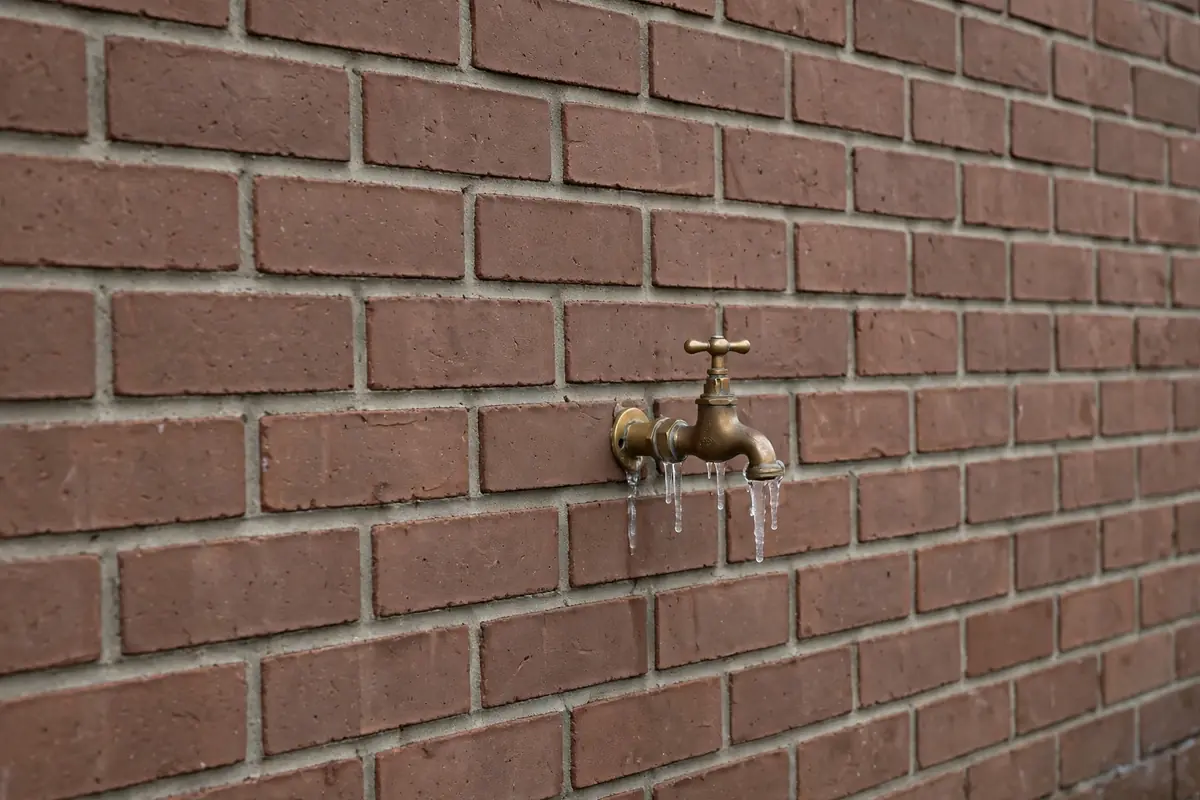
Pipes freeze where cold air reaches them: outdoor spigots, pipes on exterior walls, crawlspace and garage runs, and dock and outbuilding lines. Preparation is insulation and water movement, applied before the forecast turns.
At what temperature do pipes freeze in Conyers GA?
Pipes can freeze when temperatures stay below freezing for hours, and the risk rises sharply in the mid-20s, the range north Georgia saw in January 2025. Wind, exposure, and a pipe’s location matter as much as the thermometer reading: a pipe on an exterior wall in a draughty crawlspace freezes sooner than the same pipe inside a heated room.
- Location. Pipes in a vented crawlspace, an exterior wall, a garage, or an attic sit closest to outdoor air.
- Insulation. Bare copper loses heat roughly four times faster than the same pipe wrapped in closed-cell foam.
- Water movement. Moving water resists freezing. A faucet dripping at one drop every two seconds keeps a vulnerable line from locking up.
Why Conyers homes are vulnerable to frozen pipes
Conyers and Rockdale County homes mix slab, crawlspace, and basement construction, and older homes often have supply runs in unheated spaces that were never insulated to a modern standard. Expansive red clay and mature trees get more attention in summer, but winter’s risk is simpler: any run that cold air can reach, especially outdoor spigots and garage and crawlspace pipes, is a freeze risk.
How do I keep my pipes from freezing in Conyers Georgia?
Insulate exposed pipes and outdoor spigots before winter, seal draughts into crawlspaces and garages, and know where the home’s main shutoff is before you need it. Disconnect hoses from outdoor spigots so trapped water cannot freeze back into the pipe. On a well parcel, the well house and its pipes get the same insulation check.
1. Seal the paths cold air uses
2. Insulate the pipes themselves
3. Disconnect and drain outdoor lines
4. Keep the heat on
Should I drip faucets in Conyers winter?
Dripping a faucet served by an at-risk run keeps water moving and relieves pressure, which is what actually bursts a pipe when ice forms. Drip the faucet furthest from the main on the at-risk run, at a thin steady stream, and only during the freeze, not all winter. Dripping does not replace insulation, and it does not protect a pipe that has already frozen.
- The kitchen sink if it sits on an exterior wall.
- Any bathroom sink on the north or west side of the house.
- The bathtub or shower faucet farthest from where the main line enters the home.
Winterize plumbing in Conyers Georgia: a room-by-room checklist
Room by room: kitchen and bathroom pipes on exterior walls get insulation and cabinet doors opened during a freeze so warm air reaches them; the laundry and water heater area get a shutoff and vent check; the garage and crawlspace get pipe insulation and draught sealing; outdoors, spigots are covered, hoses disconnected, and dock and outbuilding lines isolated and drained. Walk the list before the first hard freeze, not during it.
- Outside: Disconnect hoses, drain spigots, close crawlspace vents, cover the foundation with foam board if it is exposed.
- Kitchen: Insulate the supply lines under the sink, open cabinet doors on cold nights, check the dishwasher supply line for cracks.
- Bathrooms: Insulate exterior-wall supply lines, drip faucets during hard freezes, check the toilet tank for a slow fill that could freeze.
- Laundry: Insulate the washer supply hoses, and if the washer sits in a garage, add a heat source or shut off and drain the lines.
- Water heater: Insulate the tank and the first six feet of hot and cold lines. If your heater is in the garage or attic, this matters more than anywhere else.
- Whole house: Locate the main shutoff, tag it, and make sure everyone in the house knows where it is.
What to do if pipes freeze Conyers
If a pipe freezes, open the faucet it serves, shut off water if the pipe has burst, and thaw gently with warm air or towels, working from the faucet back toward the blockage. Never use an open flame. If the pipe has burst, shut off the home’s main, keep people away from water near electrics, and call during business hours with the location and what you have shut off.
- Water staining on a ceiling or wall that was dry yesterday.
- A sudden drop in water pressure at every fixture.
- The sound of running water when nothing is on.
- A water meter that keeps spinning with all fixtures closed.
Common mistakes we see every January
The common mistakes are insulating only the visible part of a run, leaving a hose connected to an outdoor spigot, and thawing a frozen pipe with a torch. Another is forgetting the garage and crawlspace runs, which freeze first because nobody looks at them.
- Leaving the hose connected. This is number one by a wide margin. The hose traps water in the bib, and the bib splits.
- Closing the crawlspace vents too late. By the time you remember, the first hard freeze has already passed. Close them in late November, not mid-January.
- Setting the thermostat to 55°F while traveling. That is cold enough to freeze an exterior-wall pipe in a poorly insulated home. Leave it at 60°F or higher.
- Thawing with a torch. We have seen homeowners melt a PEX line, scorch a joist, and start a small fire in the same afternoon. Use warm air, not flame.
When to call a professional
Call during business hours for a burst pipe, a pipe that stays frozen after gentle thawing, or a leak you cannot isolate. Stop and call sooner, in the safety sense, if water reaches electrics or a ceiling sags, and shut off the home’s main first.
Frequently Asked Questions
At what temperature do Conyers pipes freeze?
Risk rises when temperatures stay below freezing for hours, and sharply in the mid-20s, the range north Georgia saw in January 2025. Exposure and location matter as much as the reading.
Should I drip my faucets in a freeze?
Yes, for a faucet on an at-risk run: a thin steady stream keeps water moving and relieves pressure. Dripping does not replace insulation.
What pipes freeze first in Conyers homes?
Outdoor spigots, pipes on exterior walls, and garage, crawlspace, dock, and outbuilding runs that cold air can reach.
How do I thaw a frozen pipe safely?
Open the served faucet and thaw gently with warm air or towels, working from the faucet back. Never use an open flame.
What if the pipe has already burst?
Shut off the home’s main, keep people away from water near electrics, and call during business hours with the location and what you shut off.
Get help with Plumbing in Conyers
If a pipe has burst or you cannot locate the freeze in a Conyers home, call SoCo Plumbers during business hours, Monday–Friday 9 AM–5 PM, at +1 770-897-1640, with the location, what you have shut off, and whether water is still spreading.
If a pipe has already burst or split, see Pipe Repair and Replacement in Conyers.