Repair TipsLocal Guides
How to detect a hidden water leak before it damages your home
A hidden leak rarely announces itself. It shows up as a bill spike, a damp patch, or a sound you only notice at night. This guide walks through the meter test and the checks that catch it before the damage spreads.
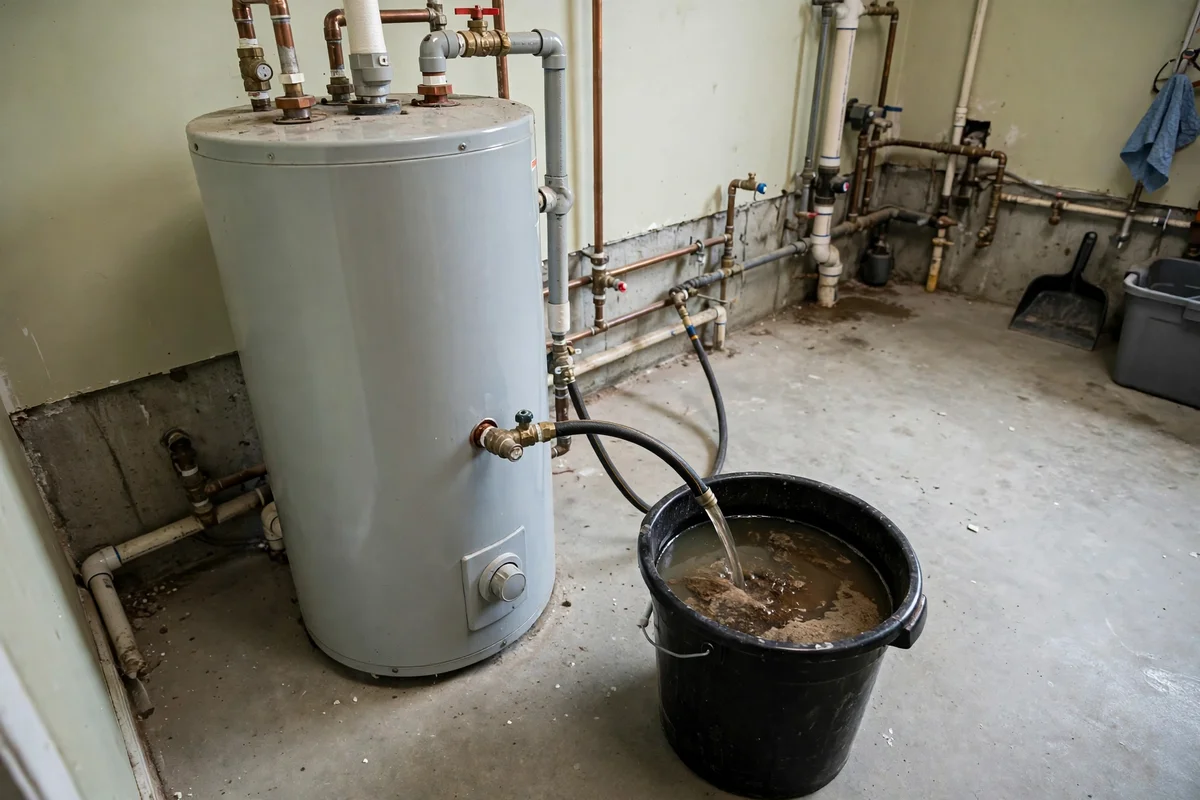
Start with the cheapest test you have: the water meter. A hidden leak is water moving when nothing is running, and the meter is the one witness that never sleeps.
Start With Your Water Meter: The 15-Minute Test
Turn off every fixture, including toilets, washing machines, dishwashers, and irrigation, then read the meter and wait fifteen minutes without using any water. If the reading moves, water is leaving the system somewhere. A second test with the home’s main shutoff closed separates a leak inside the home from a leak in the service line outside it, which is useful information to give when you call.
- Do it when nobody's showering or doing laundry - a single toilet fill will throw off the reading.
- If you have a pressure-reducing valve, the meter may tick slightly as pressure equalizes. Give it two full minutes to settle before you judge.
- Write down the meter reading before and after. A leak of just one gallon per hour is 720 gallons a month - that's real money on a Conyers water bill.
What Are the Signs of a Hidden Water Leak in Conyers, Georgia?
The signs are a bill that jumps without a change in use, a damp or warm patch on a floor, a musty smell in a room that has no plumbing fixture, paint or flooring that buckles, and the sound of running water when everything is off. In Conyers, expansive Piedmont red clay stresses slabs and buried lines, so a slab leak can show as a warm floor patch or a bill spike with no visible water at all.
Sound
Smell
Touch and Sight
- Bubbling, blistering, or peeling paint on walls and ceilings
- Buckling or cupping hardwood or laminate flooring
- Soft, spongy spots in the subfloor near a toilet or tub
- Hairline cracks in tile or grout that reappear after repair
- Staining on the ceiling below an upstairs bathroom
How Do I Know If I Have a Hidden Water Leak in Conyers GA?
Run the meter test above, then check the likely places in order: toilet flappers with a dye or listening check, the water heater’s relief and drain lines, visible supply runs, and floors for warm or damp patches. If the meter moves with the main shutoff closed, the leak is likely in the service line; if it moves only with the main open, it is inside. Either result is worth a call during business hours with the test results.
- Meter test to confirm the leak is real and continuous.
- Isolation test - shut off the main and watch the meter. If it stops, the leak is on your side of the meter. If it keeps moving, call the city.
- Fixture check - toilets are the number one culprit. A flapper that doesn't seal can waste 200 gallons a day and mimic a hidden leak perfectly.
- Acoustic listening - we use a ground microphone to hear the leak through the slab or wall.
- Thermal imaging - an infrared camera shows temperature differences where water is pooling or moving.
- Pressure testing - we isolate the hot and cold lines to determine which side is leaking.
Slab Leaks in Conyers: Why Red Clay and 1980s Foundations Matter
Slab homes hide supply and drain lines under concrete, so a slab leak cannot be seen, only inferred from the meter, the bill, and floor symptoms. Red clay that expands and contracts with moisture adds stress to those buried lines. Diagnosis uses listening equipment and pressure checks to locate the run before any concrete is opened, because opening concrete on a guess is the most expensive way to look for a leak.
- A hot spot on the floor that's warm even when the heat isn't running
- The sound of running water in a room with no plumbing fixtures
- A crack in the slab or tile that follows a straight line
- Water bill jumping sharply in one cycle without a change in use
- Damp carpet at the edge of a room, especially near an exterior wall
How Much Does Leak Detection Cost in Conyers GA?
Leak detection is priced by scope, and SoCo Plumbers does not publish firm prices. As Oct-2026 Atlanta market data, not SoCo Plumbers’ prices — call for a written price before work. TradesProHub Atlanta 2026 reports electronic leak detection $150–$400, slab detection $200–$500, and thermal imaging $200–$600. Ask for the scope and the written price before work begins.
- Detection only: as Oct-2026 Atlanta market data, not SoCo Plumbers’ prices, electronic leak detection $150–$400 and slab detection $200–$500. Call for a written price before work.
- Supply line repair (accessible): ask for the scope and the written price before work begins.
- Slab leak spot repair: as Oct-2026 market data, slab-leak work $500–$4,000 (Angi national 2026), not SoCo Plumbers’ prices. Call for a written price before work.
- Whole-house repipe (if supply pipe is failing throughout): as Oct-2026 Atlanta market data, not SoCo Plumbers’ prices, averaging about $7,508 and ranging $1,502–$15,015. Call for a written price before work.
- Mold remediation (if you waited): a separate specialist job, priced by scope; ask for a written price before work begins.
Common Mistakes Homeowners Make With a Hidden Leak
The common mistakes are ignoring a small bill rise for months, opening a wall or floor before running the meter test, and assuming a damp patch is condensation without checking the meter. Another is using a chemical product to mask a drain smell that is actually a leak symptom. Test first, open second.
- Blaming the water bill on the city. Call the city first if you want, but run the meter test before you do. Nine times out of ten, the meter is right.
- Ignoring a running toilet. A flapper that doesn't seal wastes 200 gallons a day. That's 6,000 gallons a month - more than some leaks.
- Using a stud finder or a moisture meter from the hardware store and calling it detection. Those tools tell you where moisture is. They don't tell you where the leak is.
- Cutting into the slab before pinpointing. We've seen three holes in a floor when one would have done it. Detection first, always.
- Assuming insurance will cover it. Most policies cover the damage from a sudden leak, not the repair of the pipe itself. And they may deny a claim if the leak was slow and long-running.
When to Call a Professional
Call during business hours if the meter moves with everything off, if you find a warm or damp floor patch, or if the leak is under a slab or inside a wall. Stop and call sooner, in the safety sense, if water reaches electrics or the ceiling below is sagging: shut off water and keep people away. Do not attempt slab or gas-adjacent work yourself.
- You smell mold or see discoloration on walls or ceilings
- Your water bill has jumped more than 10% for two consecutive months
- You hear running water with everything off
- A section of floor is warm, soft, or buckling
- You've already patched one leak and another appeared nearby
Frequently Asked Questions
How do I test for a hidden leak with my water meter?
Turn off all fixtures, read the meter, wait fifteen minutes without using water, and read it again. Movement means water is leaving the system somewhere.
What are the first signs of a hidden leak?
A bill spike without changed use, a damp or warm floor patch, a musty smell, buckling paint or flooring, or running water sounds with everything off.
Can a slab leak hide with no visible water?
Yes. In slab homes the lines are under concrete, so a slab leak often shows only as a bill spike or a warm floor patch, and red-clay movement adds stress to buried lines.
Should I open a wall to find a leak myself?
No. Run the meter test first and let diagnosis locate the run before any opening is made, so the opening is as small as the diagnosis allows.
What should I tell the plumber when I call?
The meter readings, whether the bill rose gradually or in one step, and any damp, warm, or musty patches, with when each started.
Get Help With Plumbing in Conyers
If your meter test shows movement with everything off, call SoCo Plumbers during business hours, Monday–Friday 9 AM–5 PM, at +1 770-897-1640, with the meter readings and the symptoms. That information lets the visit start with diagnosis, not guesswork.
If a hidden leak is confirmed, see Leak Detection and Repair in Conyers.